
Specialty Chemical
Products Manufacturing
Products Manufacturing
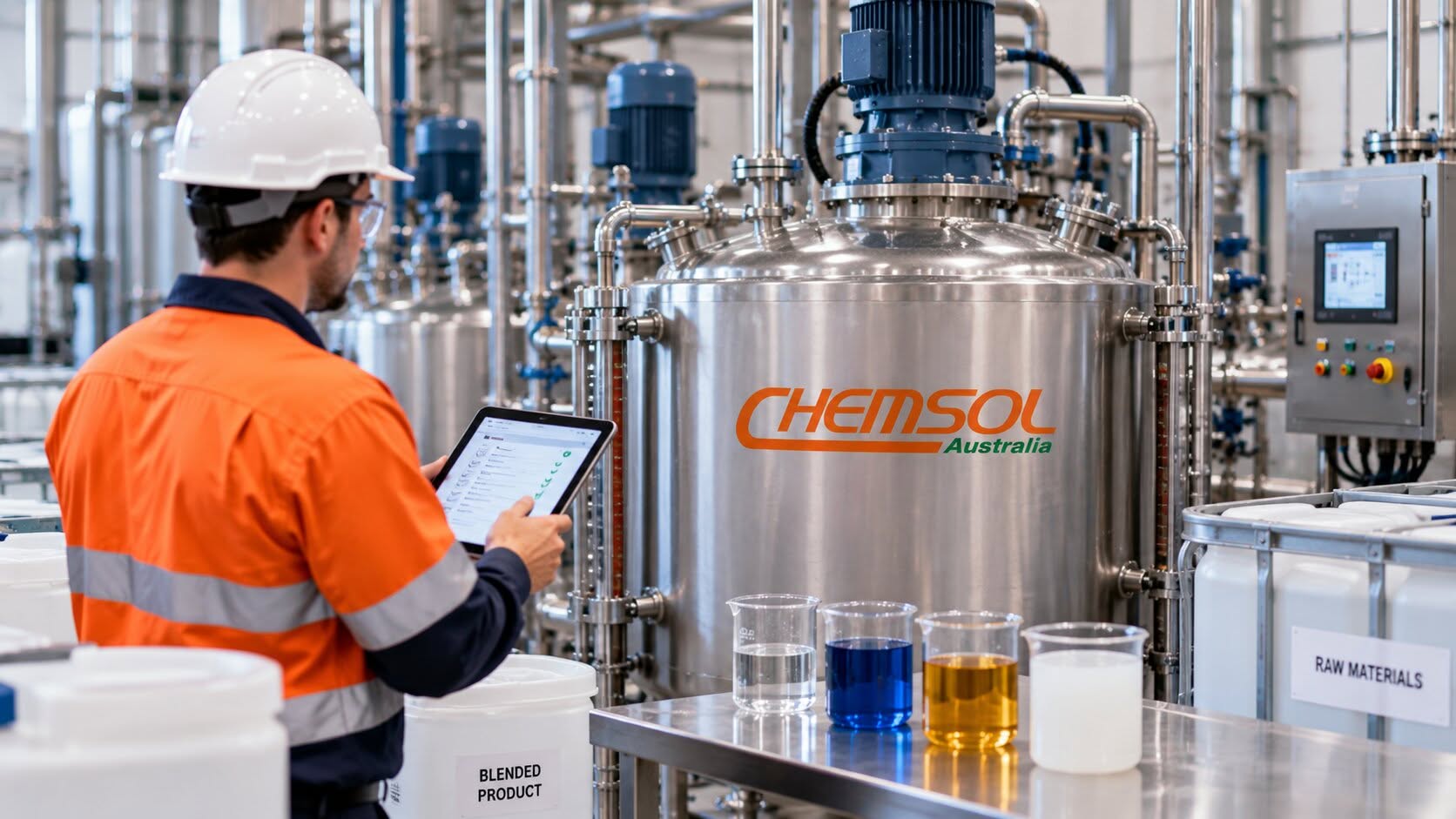
Choosing the right liquid blending service starts with understanding your production requirements. Before comparing providers, define your formulation, batch size, production volume, quality requirements, packaging needs, and delivery schedule.
These requirements give you a clear basis for comparing a liquid blending partner. They also help you determine whether a provider can support your needs beyond blending, such as formulation development, raw material sourcing, packaging, and storage.
Start with your own production requirements. Document the formulation, expected batch size, production frequency, and packaging format. Include any specific quality, storage, labelling or delivery requirements.
A clear brief allows you to compare providers against the same requirements rather than relying on general claims about capacity or experience.
Once your requirements are clear, assess each provider against the factors that directly affect production.
Look for experience with similar chemical products, applications or manufacturing requirements. This can help establish whether the provider is familiar with the type of production you require.
Check the batch sizes and production volumes the provider can handle. If demand increases, consider whether its capabilities can support your expected production needs.
Capacity alone is not enough. The available equipment should be appropriate for your formulation and the required manufacturing process.
Ask how batches are documented, sampled, and tested. Check what quality records and documentation are available with the finished product.
Discuss expected lead times before making a decision. The production schedule should fit your customer orders and supply commitments.
Consider whether you need services beyond blending. Raw material sourcing, formulation support, packaging, labelling, storage and delivery may all be relevant to your requirements.
Do not assess a provider by production capacity alone. Look at how its capabilities fit your complete manufacturing requirements. Chemsol’s toll blending services can include formulation development, raw material sourcing, batching, blending, quality control, packaging, labelling, contract storage and delivery. Chemsol also provides technical advice as part of its liquid toll blending service.
These specialised blending capabilities can be useful when your requirements extend beyond the blending stage. The key question is simple:
Can the provider manufacture your product to specification and provide the services required around production?
Quality should be assessed through actual manufacturing processes and documentation. Ask how the provider manages batch records, sampling, testing and product traceability. You should also understand what documentation will be available for each manufactured batch.
Chemsol states that each product moves through an established process from the initial batch sheet through to sampling and final laboratory analysis. Samples of manufactured products are retained on site, and Certificates of Analysis can be provided.
Chemsol is also accredited to ISO 9001 and states that it has maintained ISO 9001 quality certification for more than 20 years.
Certification is useful to consider, but it should form part of a wider assessment of the provider’s manufacturing processes and capabilities.
Use the same criteria for every provider on your shortlist.
| Selection factor | What to assess |
| Formulation | Can they manufacture your product as required? |
| Experience | Have they handled similar products? |
| Capacity | Can they meet your batch and volume needs? |
| Equipment | Is the equipment suitable for your product? |
| Quality | How are batches tested and documented? |
| Lead times | Can production meet your schedule? |
| Services | Are sourcing, packaging and storage available? |
| Future needs | Can the provider support changing requirements? |
| Cost | Does the overall service provide suitable value? |
This creates a more consistent liquid blending provider selection process.
Australian Government guidance also recommends researching suppliers and considering factors such as price, reliability and suitability when selecting a supplier.
After creating a shortlist, confirm the details that could affect your production arrangement:
These questions help confirm whether the provider is suitable for your specific requirements.
For a more detailed technical assessment, Chemsol’s guide on questions to ask a toll blending company covers additional considerations when evaluating a toll blending provider.
Price matters, but it should not be considered separately from capability. A lower price may not provide better value if the provider cannot meet your formulation, quality, production or delivery requirements.
Australian Government guidance notes that businesses should consider factors beyond price when selecting suppliers, including suitability and reliability. Compare the complete service rather than the blending rate alone.
Your production requirements may change over time. Volumes may increase. New products may require formulation support. Packaging, storage or delivery requirements may also change.
A provider with a broader range of manufacturing services may be able to support these requirements as they develop. Chemsol provides formulation and development, raw material sourcing, blending, packaging, storage and delivery as part of its toll blending capabilities.
When considering how to choose a liquid blending partner, assess both your immediate production requirements and your expected future needs.
Chemsol Australia has been operating for more than 30 years and provides chemical blending and contract manufacturing services for local, interstate and international companies. Its capabilities cover industrial, commercial and specialised requirements across industries including mining, agriculture, automotive, water treatment and marine.
Its liquid toll blending service can include technical advice, product formulation, chemical blending, quality control, packaging, labelling, storage and delivery. Products move through an established production process that includes sampling and final laboratory analysis.
For businesses considering outsourced chemical blending capabilities, the right provider should be assessed against product fit, production capacity, equipment, quality controls, lead times and the level of support required.
Choosing a liquid blending service is a production decision, not just a price comparison. Start by defining your formulation, volume and service requirements. Then compare providers based on experience, equipment, capacity, quality controls, lead times and supporting services.
For businesses considering outsourced chemical blending capabilities, Chemsol Australia provides liquid toll blending supported by formulation, raw material sourcing, batching, quality control, packaging, storage and delivery.
Assess your current requirements alongside future production needs. This gives you a clearer basis for choosing a liquid blending partner that fits your business.
Look for relevant chemical experience, suitable production capacity, appropriate equipment, quality controls, reliable lead times, and services that match your production requirements.
Define your formulation, batch size, production volume, and service requirements first. Then compare providers against the same criteria for capability, quality, lead times, services, and cost.
Ask about formulation capability, batch sizes, production capacity, quality testing, documentation, lead times, packaging, storage, and delivery.
It is important because the provider needs to handle your required batch sizes and production frequency. Consider future requirements if you expect production volumes to increase.
No. Price should be assessed alongside production capability, quality, reliability, lead times, and the services included in the overall arrangement.